Beauty Under Pressure
I’ve been thinking a lot about disruption.
My work has long had something to do with interruption, fracture, revision, and change. I don’t think of disruption as simply damage or chaos. In painting, disruption can be generative. It can open the work. It can prevent beauty from becoming too settled, too polite, too easily consumed.
At the same time, I remain deeply committed to beauty.
That may sound unfashionable in some circles, but I don’t have much interest in pretending otherwise. I want the paintings to be beautiful. I want them to have color, movement, atmosphere, seduction, pleasure. I want them to invite the viewer in. But I am increasingly interested in a kind of beauty that is not innocent. Beauty that has been interrupted. Beauty that has had to survive pressure.
Landscape is central to this thinking.
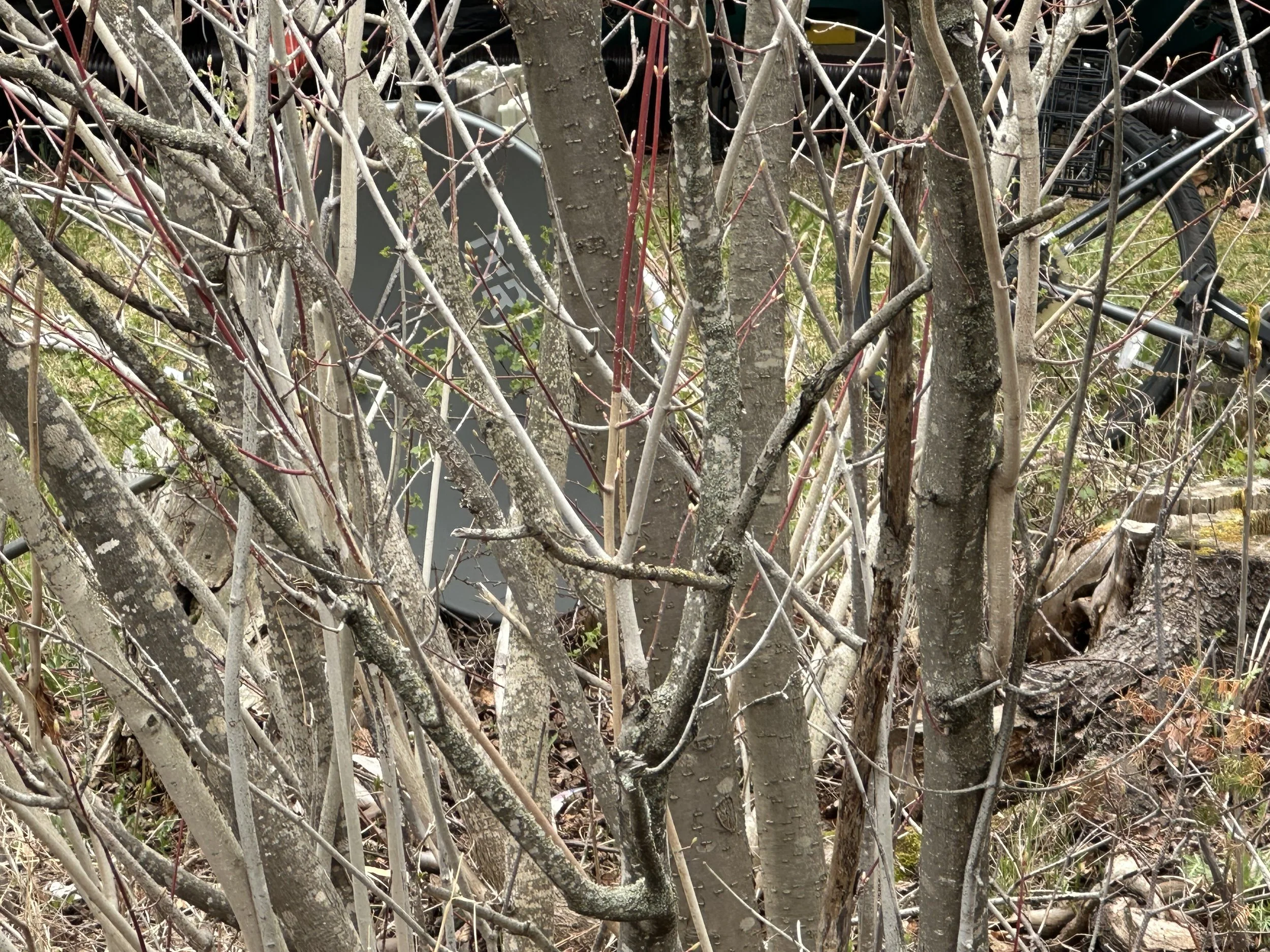
When we look at the landscape around us, we tend to idealize. We edit as we see. We look past the power lines, the garbage in the ditch, the culverts, the machinery, the torn-up edges, the ugly buildings, the scars of use and neglect. We do this without even thinking. The eye is a marvelous little curator. It frames, crops, softens, forgives. It makes a composition out of whatever is in front of us.
This is not necessarily dishonest. It may be one of the ways we continue to love the world. We preserve beauty by looking around the damage.
But the damage is still there.
I am not interested in making paintings that literally include all that junk. I don’t want to paint power lines and garbage bags as a kind of obvious environmental message. That feels too direct for me, too moralizing, too much like pointing at the problem. I am not interested in preaching through imagery. The world already contains plenty of evidence. I don’t need to illustrate the obvious.
I am also aware of my own position in this. I am an older white male artist, and for much of art history that identity functioned as the default setting. It was often treated as neutral, universal, authoritative. Thankfully, that has changed. That change matters. It also changes the way I understand my own voice.
I do not feel entitled to preach. I am not interested in using identity as subject matter, and I am not interested in pretending that I stand outside history, looking down from some clean moral hilltop. Artists who looked like me were given that hilltop for a very long time.
So the question becomes: how do I make paintings that are serious, beautiful, disruptive, and honest without turning them into declarations? How do I address disturbance without claiming authority over it? How do I make work that acknowledges damage without simply illustrating it?
For me, the answer is process.
The painting does not depict disruption. It undergoes it.
That distinction matters to me.
The environmental disturbance I am thinking about does not have to appear as a recognizable object. It can appear as a rupture in the surface, an awkward shift in color, a scraped-out passage, a collision between forms, a dragged mark, a broken rhythm, a section that has been buried and brought back, an image that refuses to stay whole. The process becomes the metaphor.
In that sense, the painting behaves more like the landscape itself. It absorbs pressure. It accumulates marks. It changes through contact. It is built, damaged, repaired, altered, revised, weathered. It holds together, but not without evidence of struggle.
This is where beauty becomes interesting to me.
Beauty is not the absence of disruption. Beauty is what happens in relation to disruption. It is what survives, adapts, mutates, or reassembles itself after the interruption. A painting can be lush and unstable at the same time. It can offer pleasure while also carrying unease. It can seduce the viewer and then refuse to resolve completely.
That feels closer to how we actually experience the world.
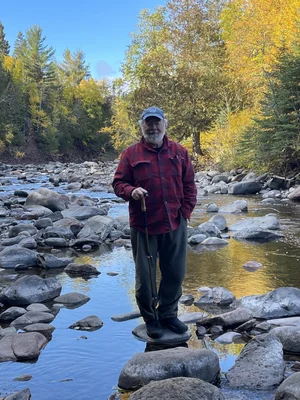
We stand beside a river and feel wonder, even though the river carries what we have done to it. We look at a field and see light, distance, weather, and growth, while also overlooking the evidence of use, extraction, development, and waste. We experience beauty and damage simultaneously, though we often separate them in our minds.
Painting allows me to hold those contradictions together without explaining them away.
The disruption in the work is not a symbol placed on top of the painting. It is embedded in the making. It is structural. It is procedural. It is part of how the image comes into being.
This also connects to the way I think about the act of painting itself. A painting begins in possibility. It gathers, shifts, resists, collapses, recovers. There are moments when the painting seems to know where it is going, and then some interruption changes everything. A color arrives that does not belong, until it does. A form breaks the space open. A beautiful passage has to be sacrificed. Something awkward becomes necessary. Something damaged becomes alive.
That is the territory I want to work in.
Not beauty as escape.
Beauty under pressure.
Beauty with weather in it.
Beauty that has been disrupted and still insists on becoming visible.