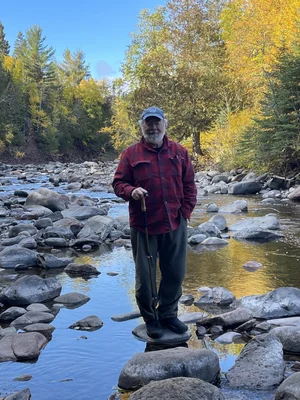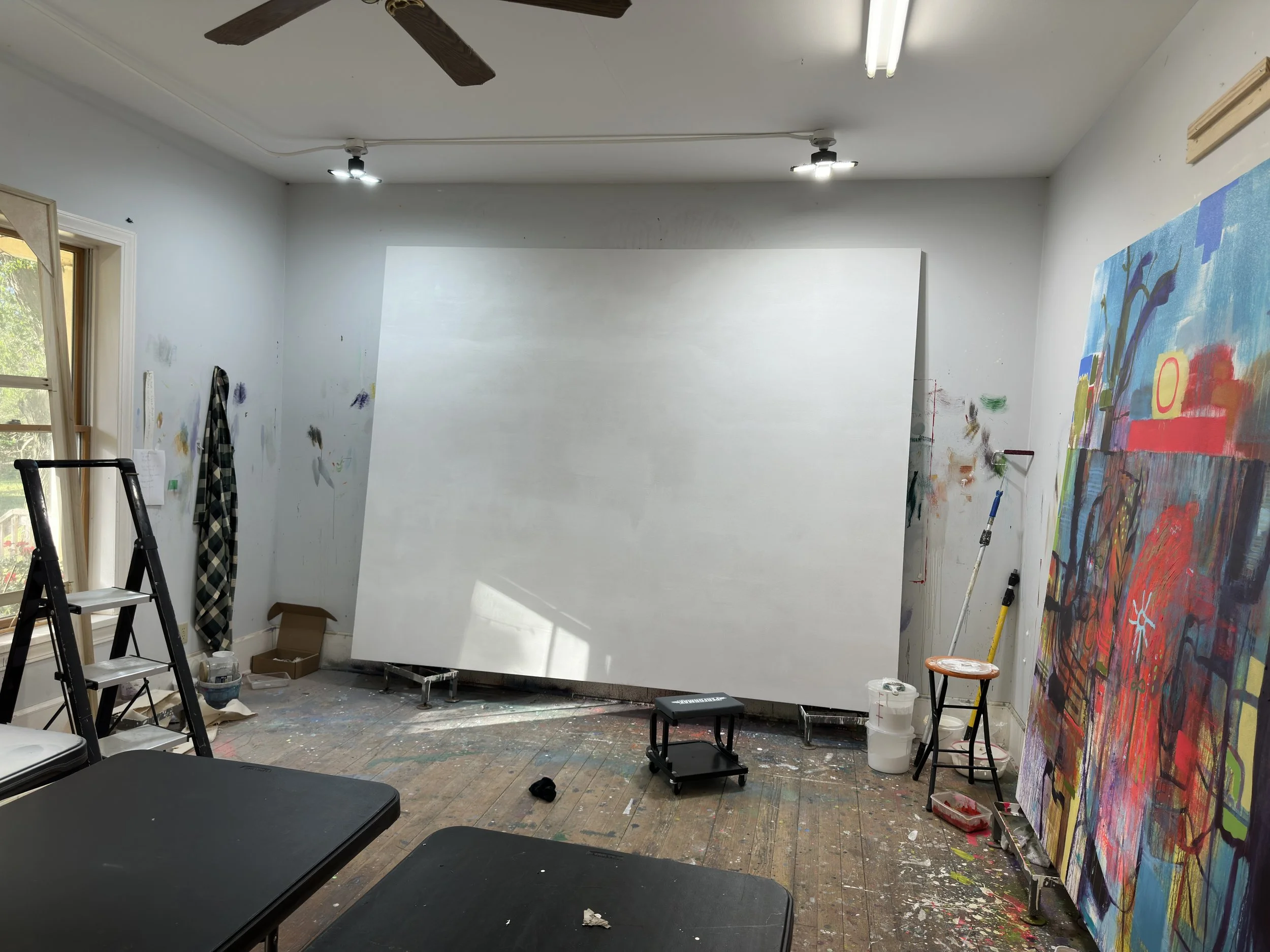
I work on a large scale, although in the context of contemporary art I tend to think of my paintings as relatively medium-sized. There are many artists working much, much larger.
For me, scale is not primarily about making something impressive. It is a way of creating enough space for the viewer to enter the world of the painting rather than simply stand apart from it. Landscape is my primary subject matter. I generally do not put people into these landscapes because I do not want the viewer to occupy a voyeuristic position—looking into a painting and watching somebody else experience the place. I want the viewer to enter the landscape directly: to explore it, move through it, and become involved in it. That comes from the way I experience landscape myself. Moving through a place is never only visual. There is the feeling of sun on the skin, rain, water, gravity, earth and soil. There are textures, colors, patterns and movement. There is wind. All of those sensations become part of what a landscape is. I try to bring that sensory experience into the paintings. In that sense, the paintings are abstract at their core.
They may begin with landscape, but they are not simply pictures of what I see. They come from what I experience through my body and my senses as I move through the world. This is also why the question of monumentality matters to me.
Large-scale painting carries a complicated history. Monumentality has often been associated with authority, power and empire, and with art intended to overwhelm the viewer through sheer physical presence. Those associations cannot simply be ignored, particularly when thinking about what monumentality can mean in painting now. But I do not think the answer is to abandon scale. I am interested in asking whether scale can function differently. Can a painting be monumental without dominating? Can physical presence create intimacy rather than authority? Can scale make room for a viewer rather than overpower them?
Artists like Elizabeth Murray complicated the idea of monumentality by twisting, breaking, and sometimes almost torturing the conventional framework of the stretched canvas. Her paintings could be physically enormous while remaining rooted in intimate, familiar subjects: a pair of shoes, a teacup, an artist’s palette. The scale did not make those subjects heroic in a traditional sense. Instead, it made intimacy strange, physical, and immersive. That possibility matters to me.
Monumentality can enlarge an experience without turning it into a declaration of power. That is what I want from my large paintings. I want them to have physical presence, but also intimacy. I want the viewer to feel invited rather than confronted—to enter the landscape and establish their own relationship with it rather than submit to mine. I don’t want my large-scale paintings to dominate. I want them to question. I want their scale to open possibilities rather than close them down—to create a physical space in which the viewer can wander, encounter, doubt, and discover.
Monumentality does not have to provide certainty. Perhaps it can do precisely the opposite. For me, monumentality is not about imposing a vision. It is about creating enough space for an experience—and enough uncertainty for a question.
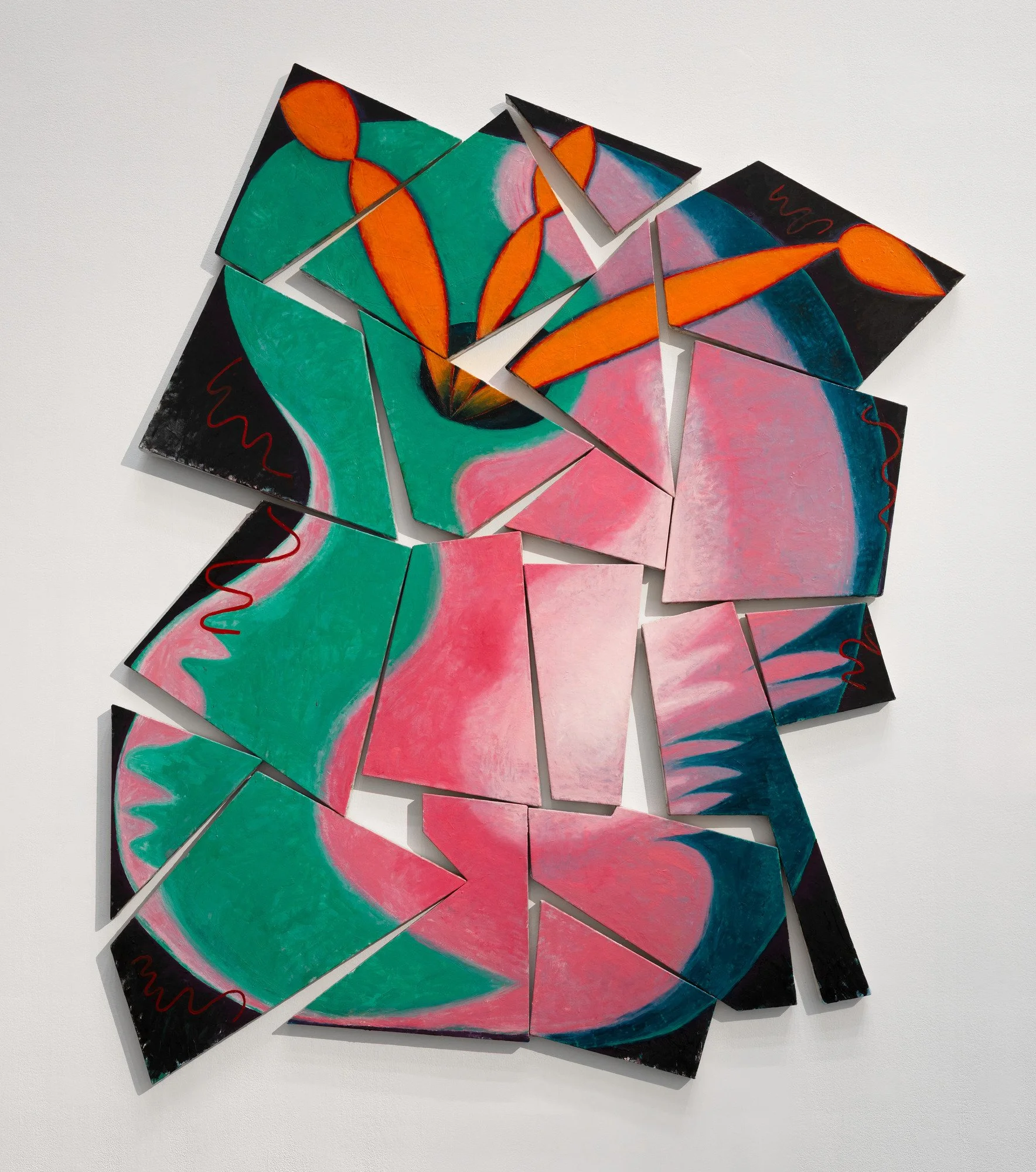
Elizabeth Murray
Painters Progress 1981